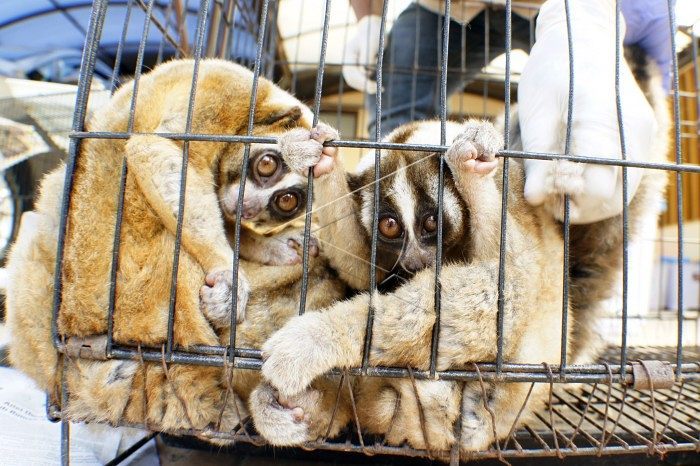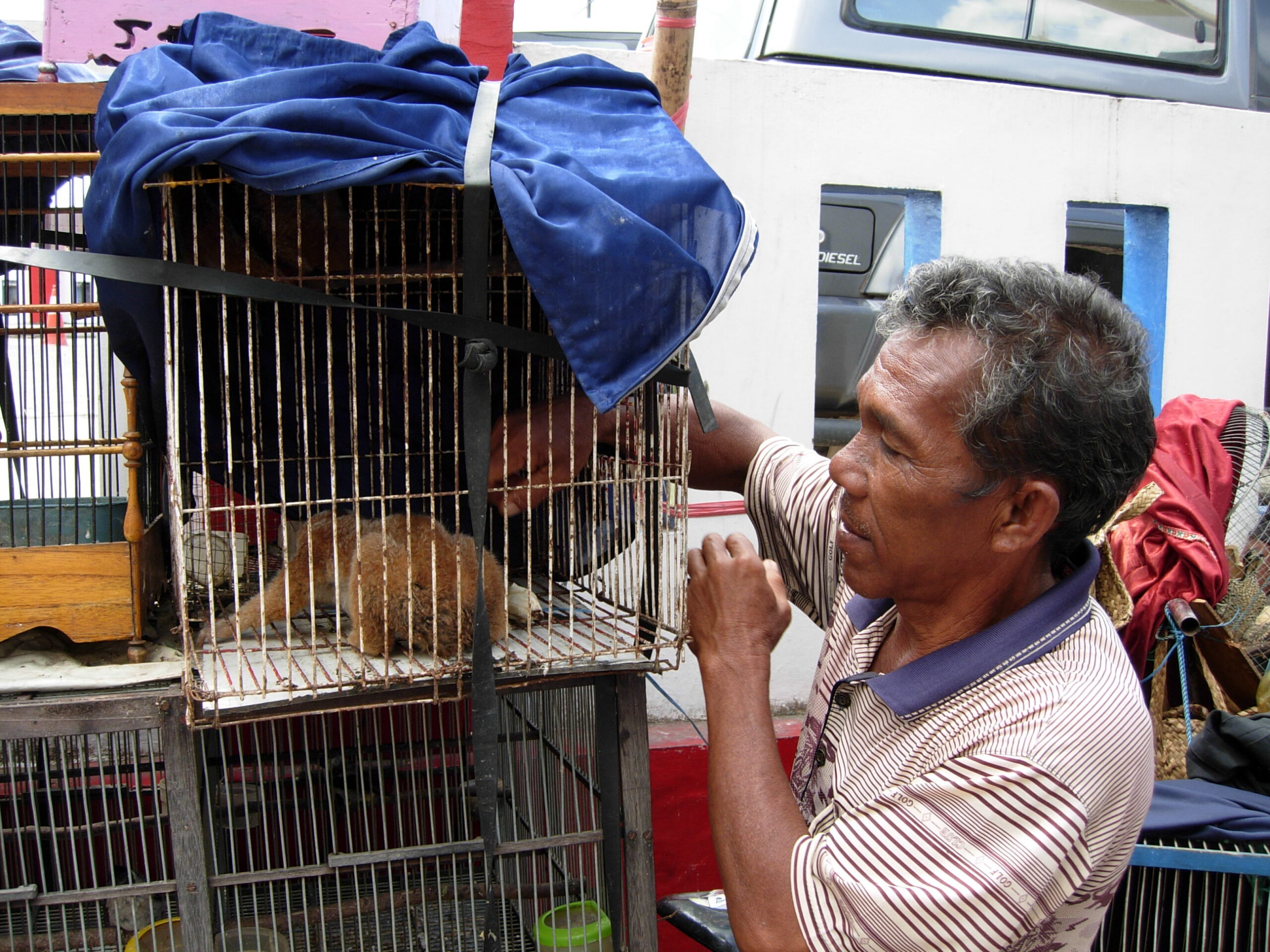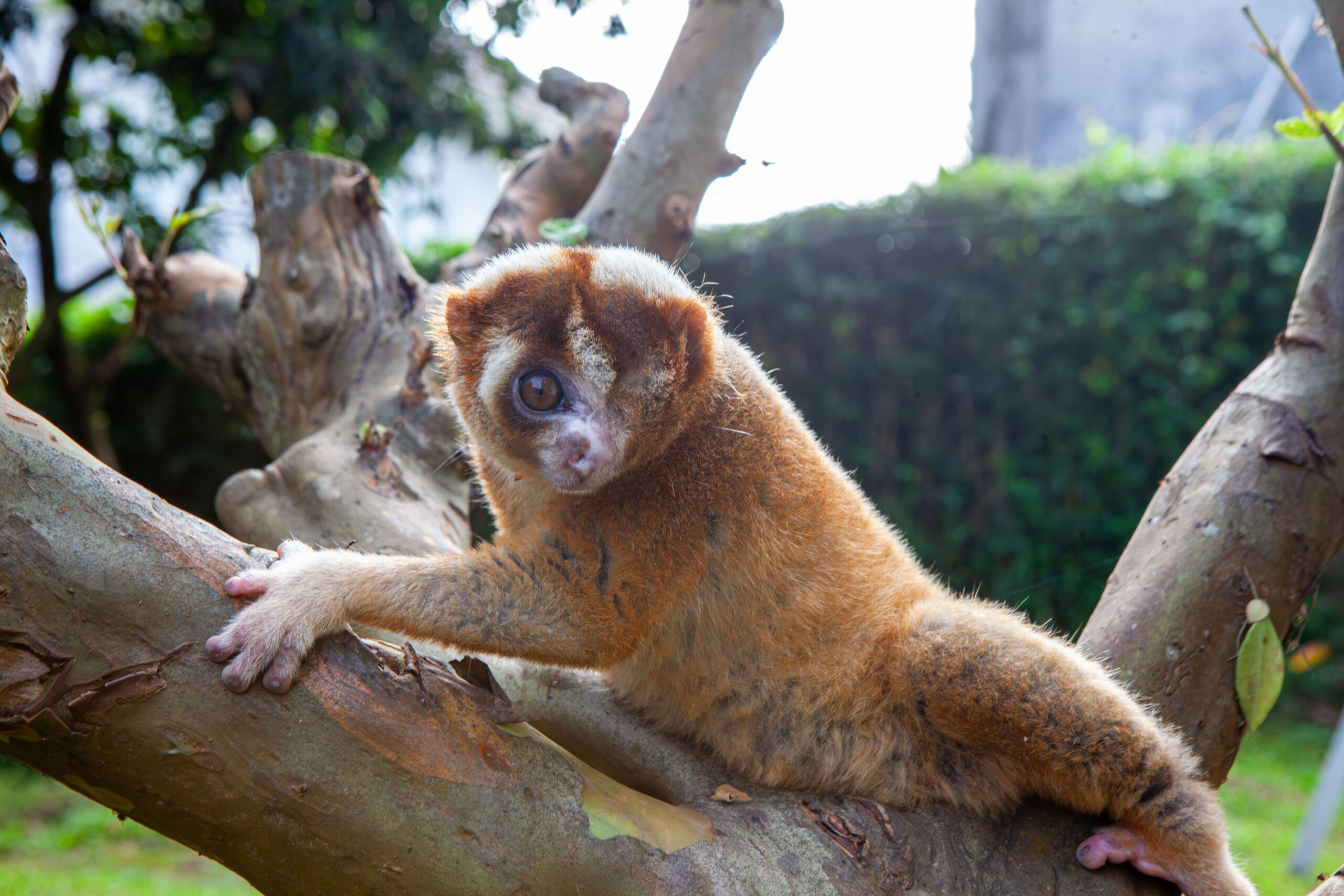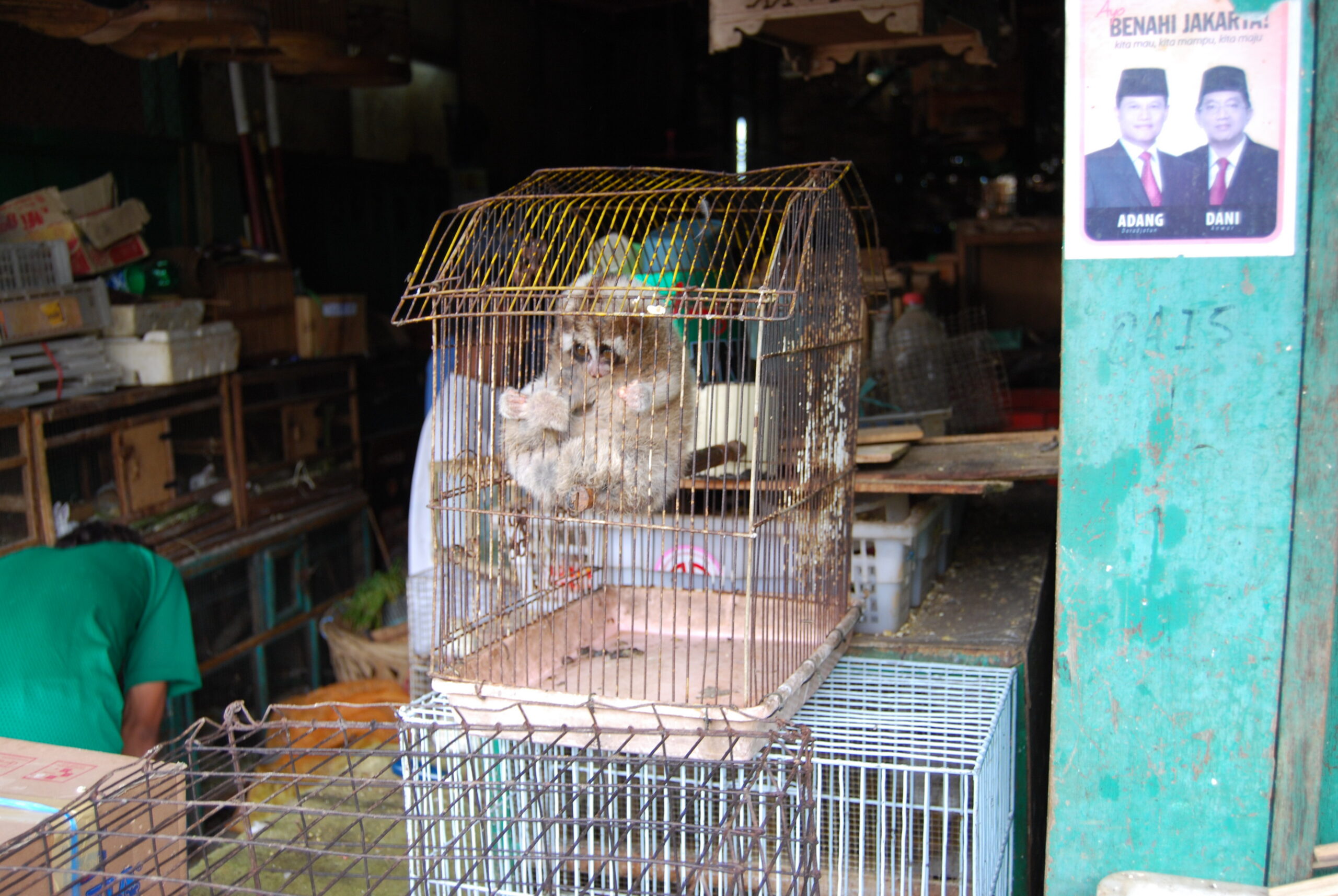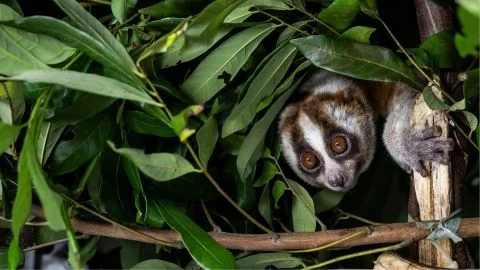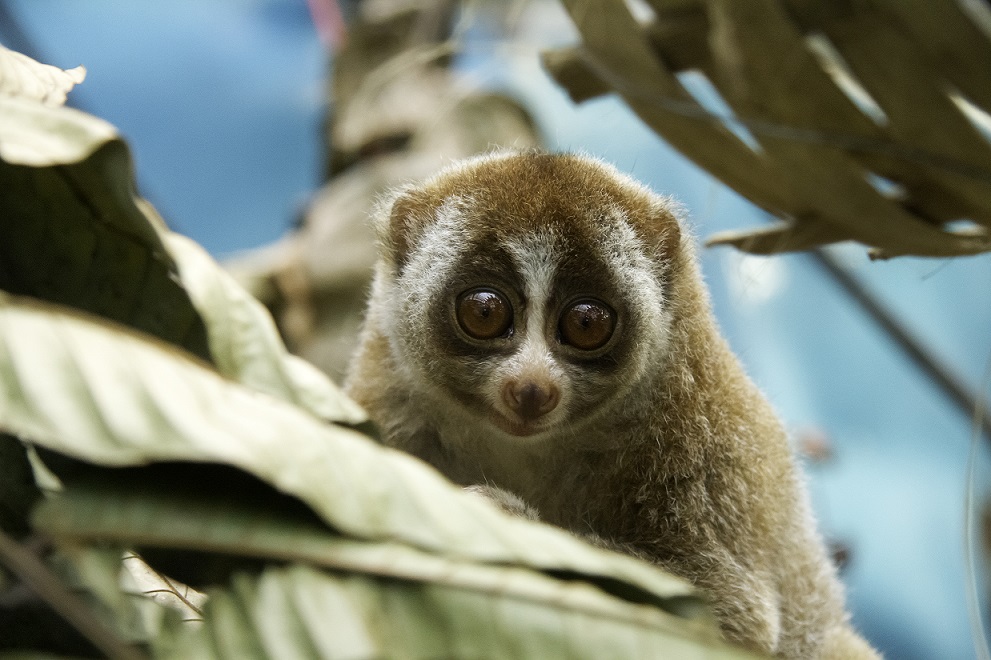
Slow Lorises’ huge brown eyes and soft fur make this small nocturnal primate highly prized as a pet and the victim of an online craze created by videos on the internet. Slow lorises are poached from the wild and illegally sold on the street, in animal markets and increasingly on social media sites. The slow lorises’ teeth are clipped off by the traders to make them easier to handle, resulting in the death of many of them from blood loss or infection before they are sold.
Once their teeth have been clipped, rescued lorises are no longer able to fend for themselves back in the wild. In some cases, thanks to assistance and advice from our team of volunteer veterinary dental specialists, it is possible to repair the damage but we also provide a permanent home at our centre for lorises that can never be released.
-
0 yrs
average life span
Slow lorises live for around 25 years in the wild.
-
0 +
SLOW LORIS RESCUED
More than 600 rescued slow lorises have been released back into protected forests.
-
Distance Per Night
Slow lorises frequently ’race walk’ and can move up to 8 km per night.

Saving Slow Lorises
Our Slow Loris Conservation Work
1. Javan slow loris – Nycticebus javanicus
2. Sunda or greater slow loris – Nycticebus coucang
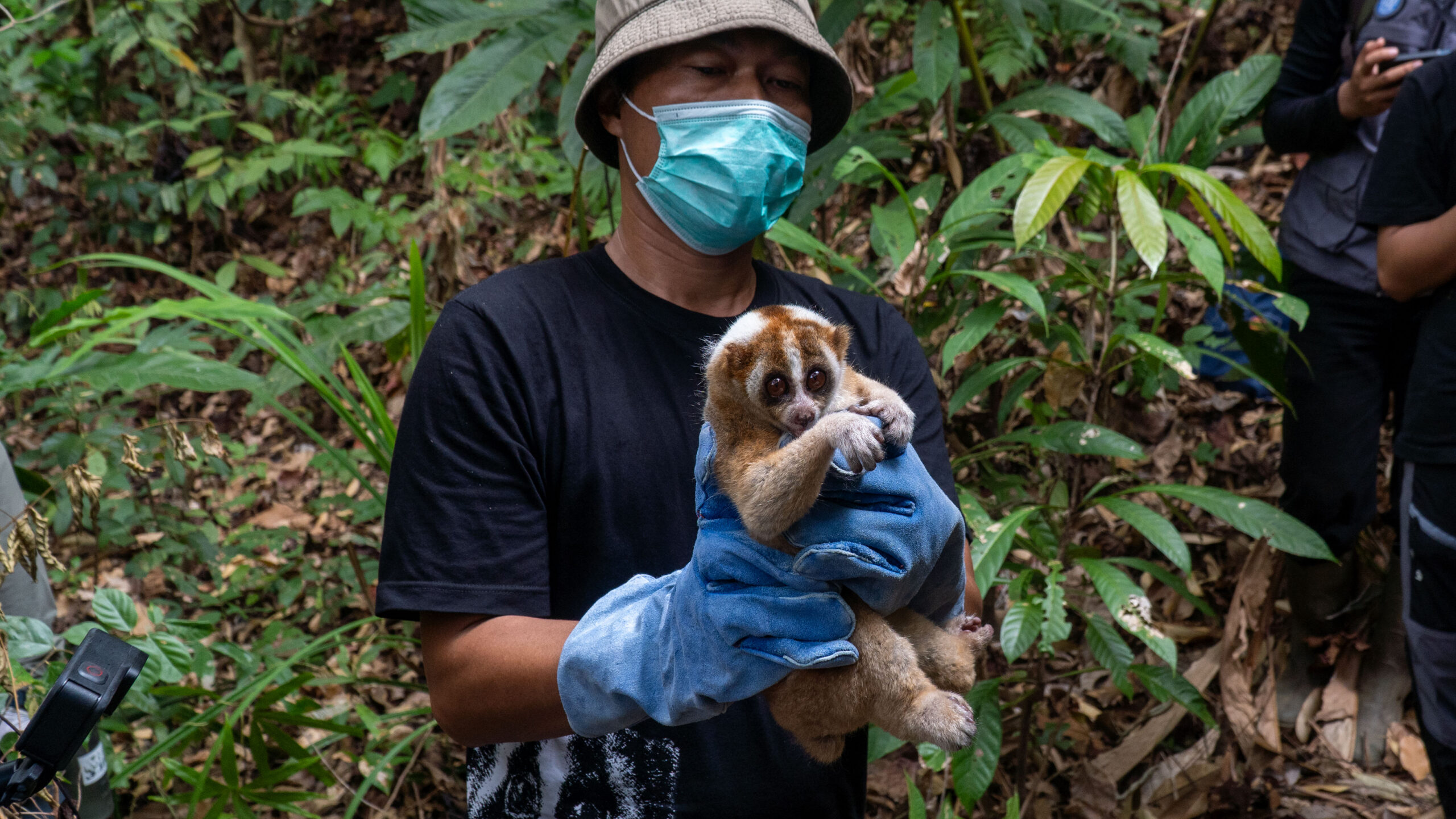
YIARI rescue slow lorises from markets, smugglers, and private homes, providing expert veterinary care and rehabilitation in specially designed facilities. If they are assessed as fit for survival, they are released into protected forest habitats in Java and West Kalimantan. The team also monitors released animals, conducts field research, and works closely with local communities to raise awareness and reduce demand for lorises as pets. Their work addresses both the immediate welfare of individual animals and the long-term survival of the species in the wild.