
A recent feature-length article in The Guardian highlights the complex realities of orangutan conservation in Indonesia and the difficult, often high-stakes decisions, faced by frontline conservation teams working to protect this critically endangered species.
The work of our frontline partner, YIARI, is guided by a clear principle: conservation must be evidence-based, science-led and rooted in long-term, locally appropriate solutions for both orangutans and the people who share their landscape.
Negative human–orangutan interactions arise when forests are cleared or fragmented by mining, agriculture, forest fires and other land-use pressures, leaving orangutans with fewer places to live and feed. As a result, they may move into farms, plantations, or villages in search of food or shelter, creating risk for both people and wildlife. YIARI’s approach is to understand why these negative human–orangutan interactions occur and to address the conditions that cause them.
That is why, 13 years ago, YIARI, led by Founder and Chief Executive, Dr Karmele Llano Sánchez, deployed the Orangutan Protection Unit (OPU), which addresses negative human-orangutan interactions at their source. The unit, comprising more than 20 team members, operates across multiple landscapes and works in 16 villages identified as conflict hotspots.
The OPU works closely with local communities to safeguard forests, agricultural land, and orangutans through practical coexistence strategies. This includes responding to community reports of orangutans in conflict areas, deploying patrols to verify sightings, and working with village teams to assess whether displaced orangutans can safely be guided back to suitable forest habitat. YIARI also invests in education and outreach activities to increase understanding and strengthen long-term coexistence between local communities and orangutans.
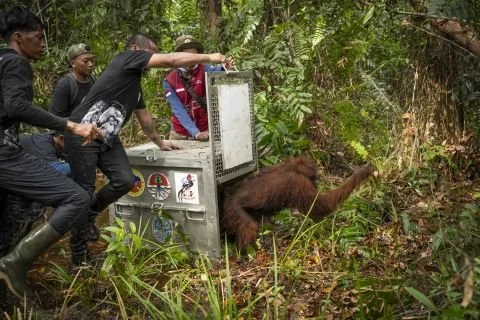
However, as forest conversion and fragmentation continue, orangutans living at the forest edge lose their habitat, forcing them to crop raid plantations and enter villages looking for food. When individuals repeatedly raid crops in the same area, they face being shot at. In these situations, translocation is the only solution to ensure their survival.
The decision to translocate is never simple, as Karmele explains:
“Unfortunately, while forest loss and conversion continue to happen, and orangutan habitat continues to shrink, more rescues and translocations will need to happen if we don’t want to lose large numbers of orangutans. With a predicted long-dry season exacerbated by El Niño approaching, we fear that many more orangutans will be in dire need of rescue.”
Before any translocation takes place, YIARI assesses the orangutan’s condition, the reasons for its isolation, and the suitability of the forest to which it may be moved. This involves evaluating habitat structure, food availability and levels of human activity and disturbance. Translocation is a lengthy and resource-intensive process, requiring specialist expertise, careful planning, and substantial local manpower. It is always a last resort, taken only when evidence shows it is the best option to ensure the individual’s long-term survival.
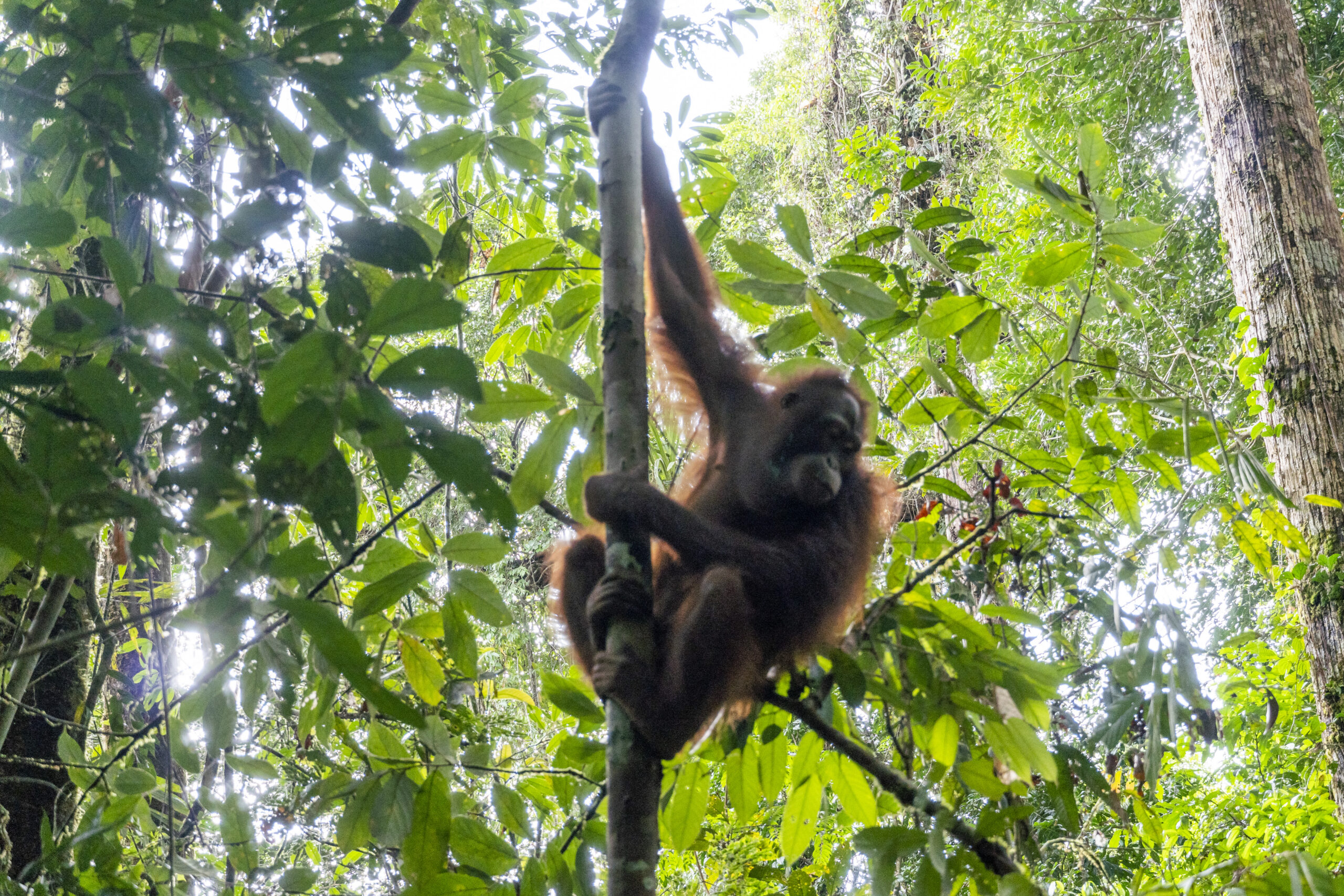
The story of an orangutan named Mama Ris, highlighted in The Guardian article, shows why this approach matters. In 2015, after entering a plantation and facing imminent danger, Mama Ris and her infant were rescued near a main road, far from the forest edge and translocated back to the forest by the Natural Resources Conservation Agency (BKSDA) with support from YIARI. Ten years later, in 2025, Mama Ris was seen again not far from where she was originally rescued, but this time with a new infant. This highlights that some orangutans can sometimes return to their original home range, but equally it illustrates that they can survive long-term and reproduce successfully after relocation.
Today, she is thriving in the wild.
What began as a desperate situation for an orangutan who might otherwise have been killed has become a hopeful success story: a wild-born orangutan who continues to contribute to the survival of her fragile species.
Our mission will always be to protect and restore habitats so wildlife can thrive naturally alongside local communities. But when intervention is necessary, it represents a complex compromise made in order to save a life.
For rescued infant orangutans, that commitment can mean 5-10 years of intensive rehabilitation before they are ready to return to the forest. Every successful orangutan rescue, rehabilitation, reintroduction, and translocation are the result of extraordinary dedication from the BKSDA and local YIARI teams, as well as communities working on the ground.
International Animal Rescue and YIARI are incredibly proud of these achievements. Together, we remain committed to protecting wildlife, supporting communities, and helping build resilient ecosystems where both people and animals can thrive.
To read the full article on The Guardian click HERE