
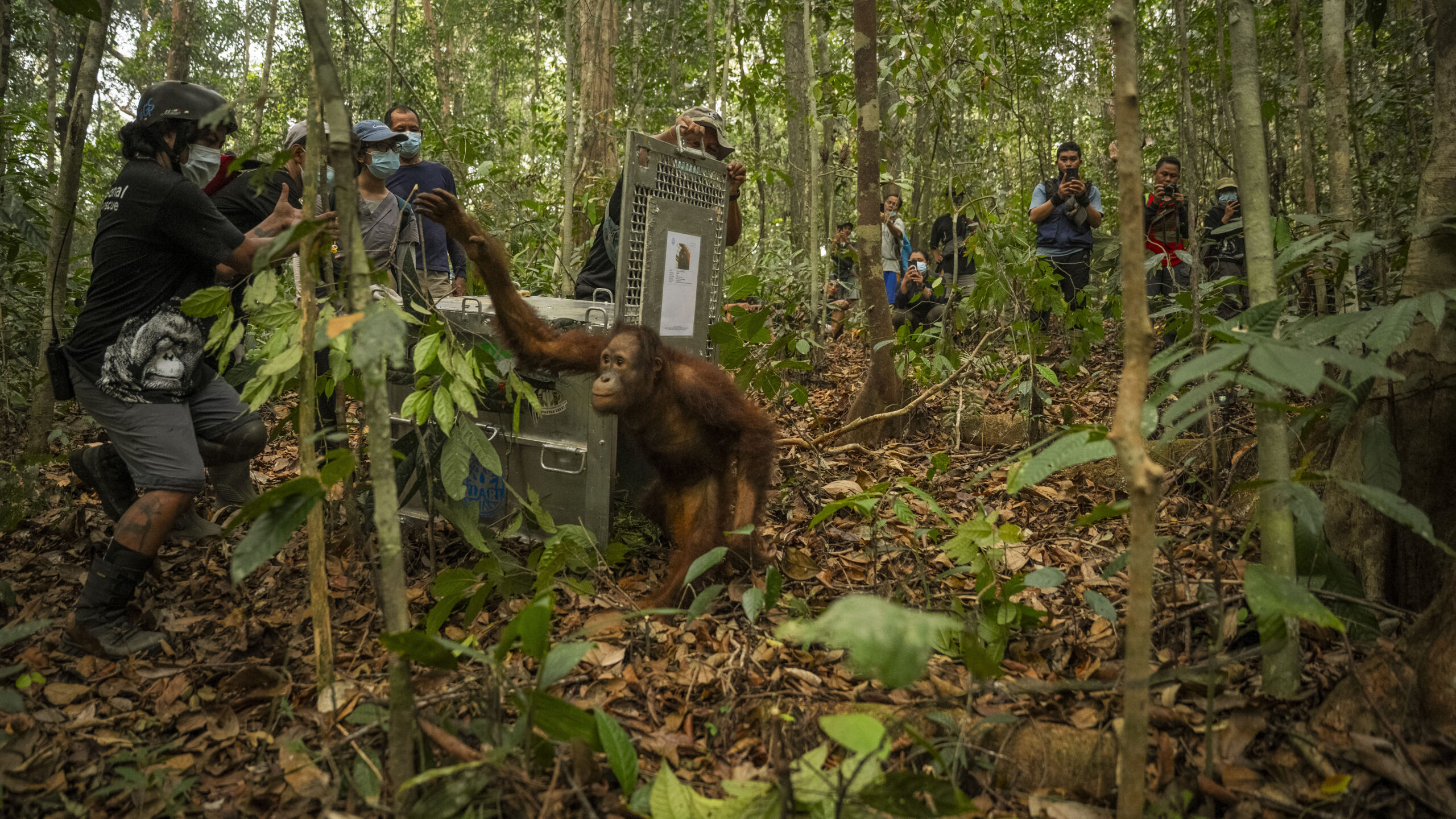
Eight wild orangutans rescued from forest fires in West Kalimantan have been released into the Batu Nyambu Protection Forest in Ketapang Regency. It is the first time orangutans affected by this year’s fires have been returned to the wild.
The release on 9 October 2026 was carried out by our partner in Indonesia, YIARI (Yayasan Inisiasi Alam Rehabilitasi Indonesia), working with the Ministry of Forestry through the West Kalimantan Natural Resources Conservation Agency (BKSDA), the West Kalimantan Provincial Environment and Forestry Agency, and the North Ketapang Forest Management Unit (KPH). The Hulu Sungai District Head, local communities, the military and police, and customary leaders also gave their support.
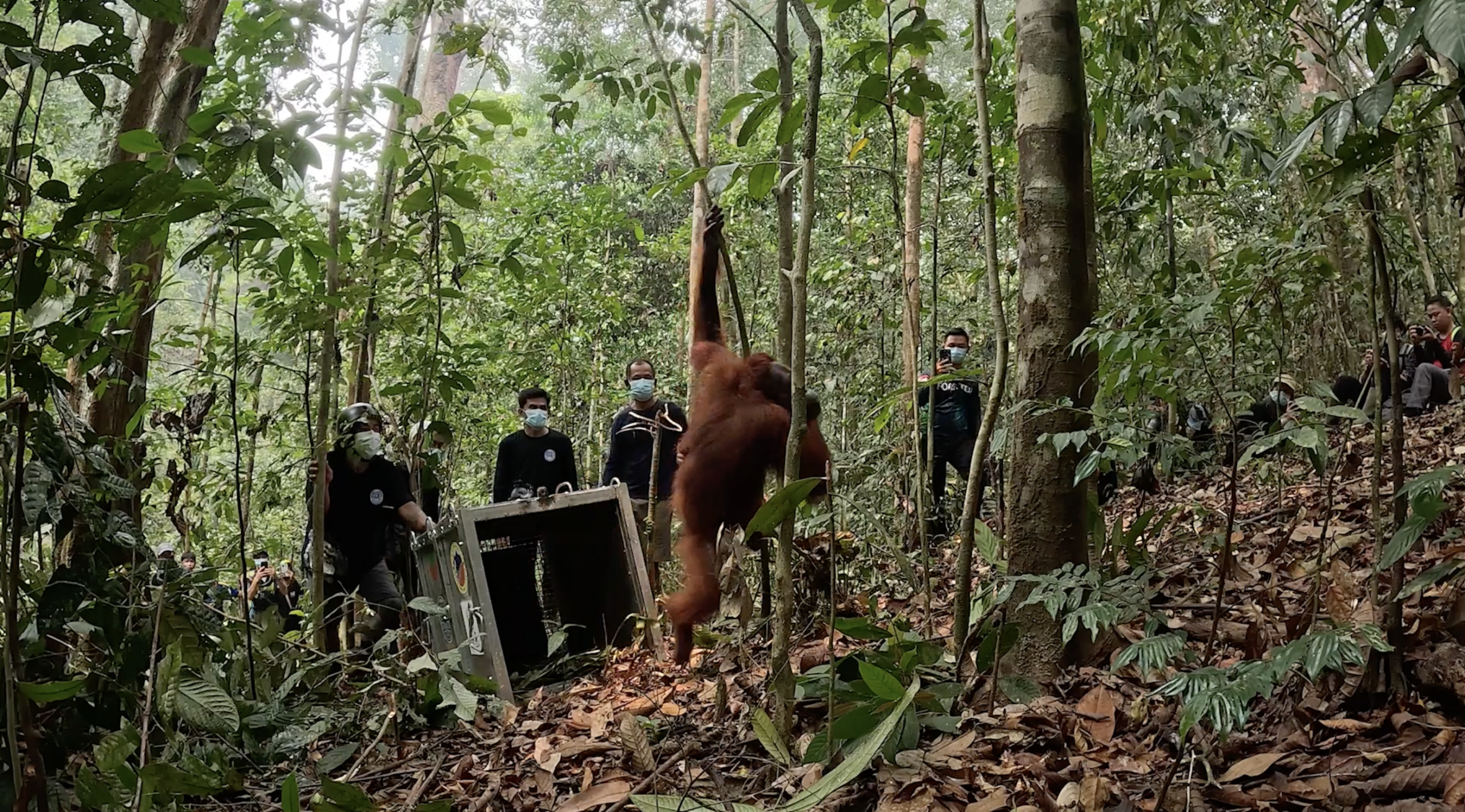
Watch the full release
Trapped with nowhere to go
Mama Man and her infant, Man, had been living in plantations next to a small patch of forest in Tempurukan Village since June. As the fires closed in, smoke and flames left them with nowhere to go. They were rescued on 3 September.
A day later, the team rescued Mama Nopi, her infant Nopi, and two young males, Naufal and Nopan, from coconut and rubber plantations in Pemangkat Village. Fire had burned the surrounding forest, leaving them short of food and at growing risk of conflict with people.
Mama Lifa and her infant, Lifa, were found in Pelang Village clinging to a handful of acacia trees in an area of about 400 square metres, surrounded by oil palm. Their habitat could no longer feed them, and they were rescued on 18 September.
A long journey home
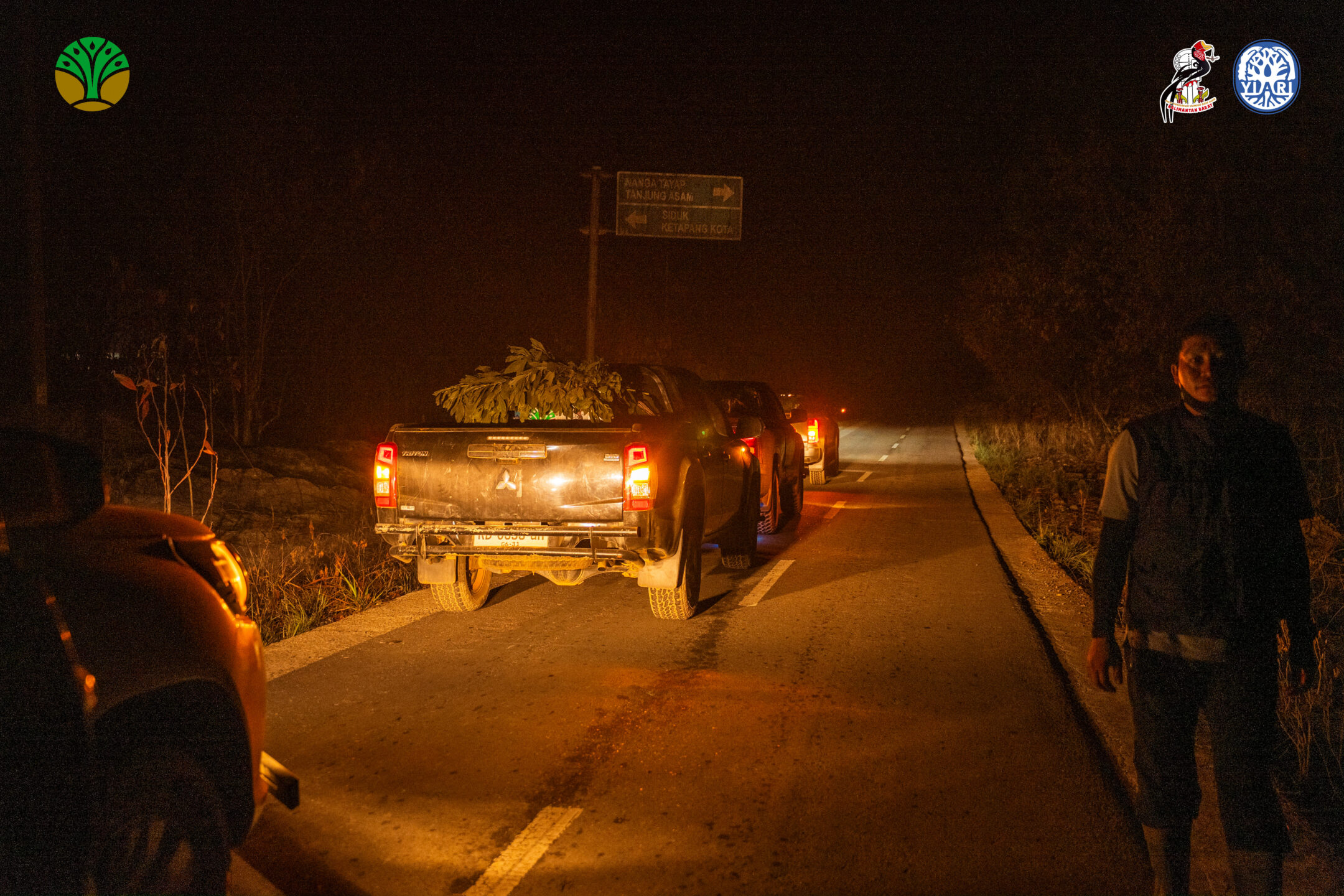
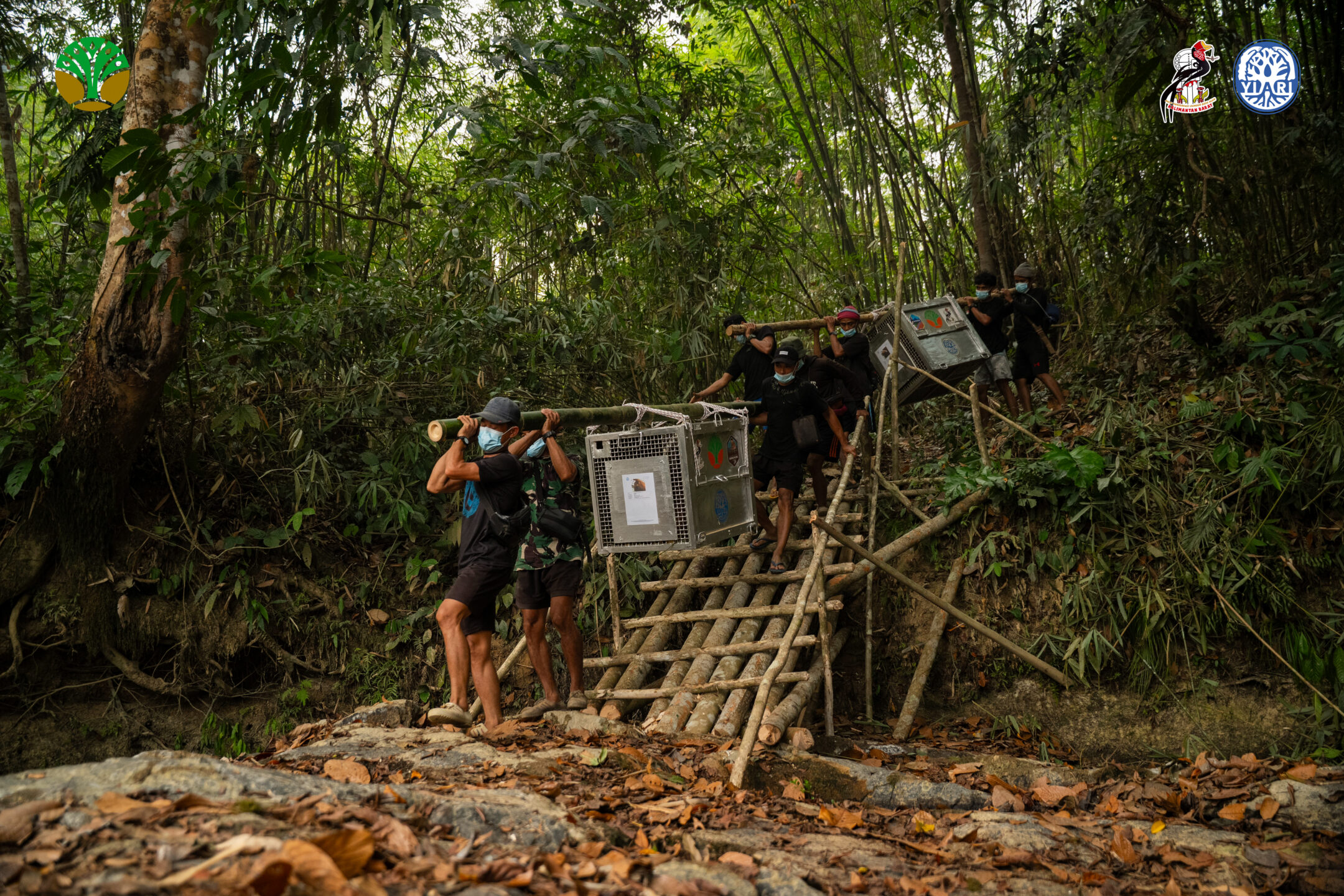
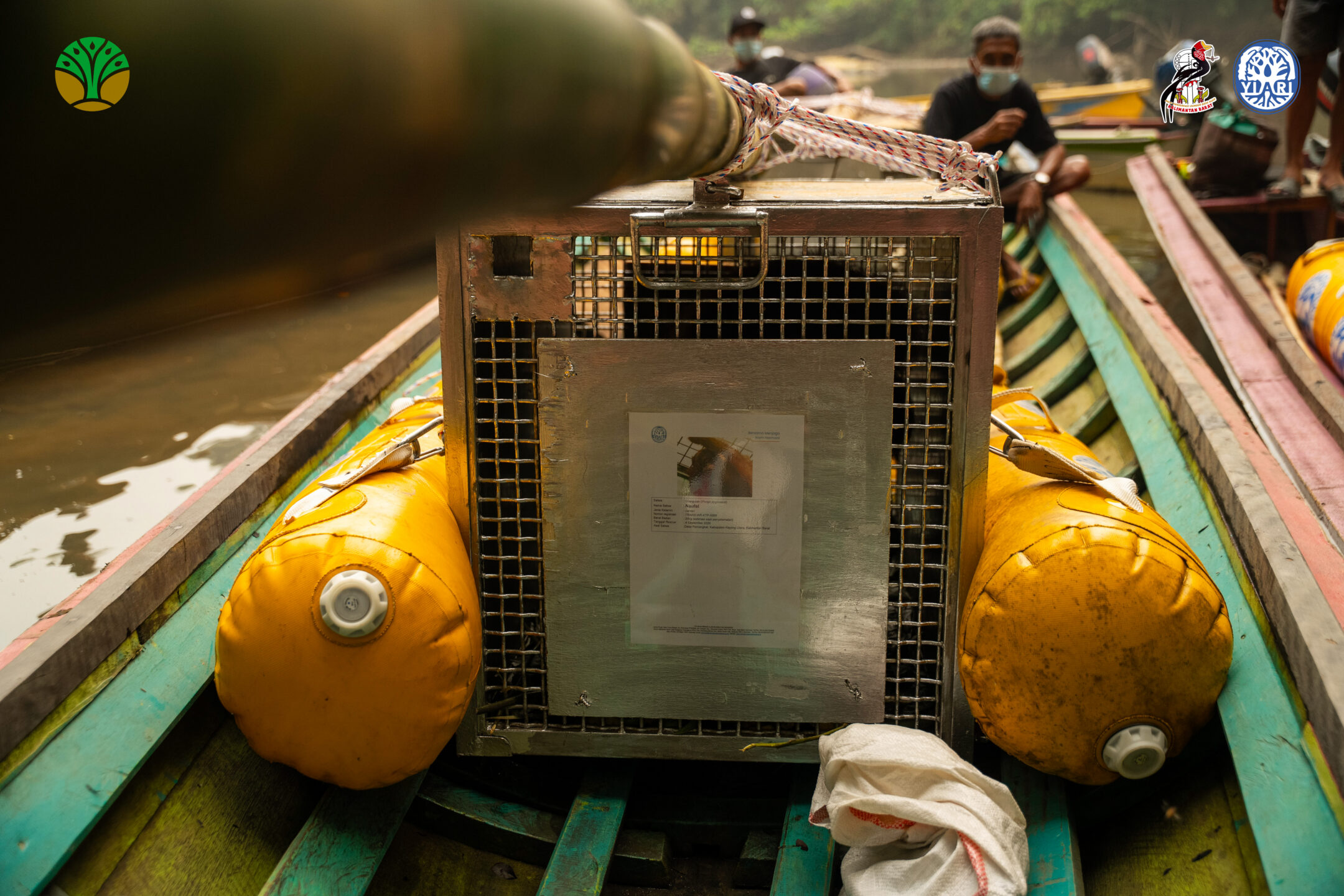
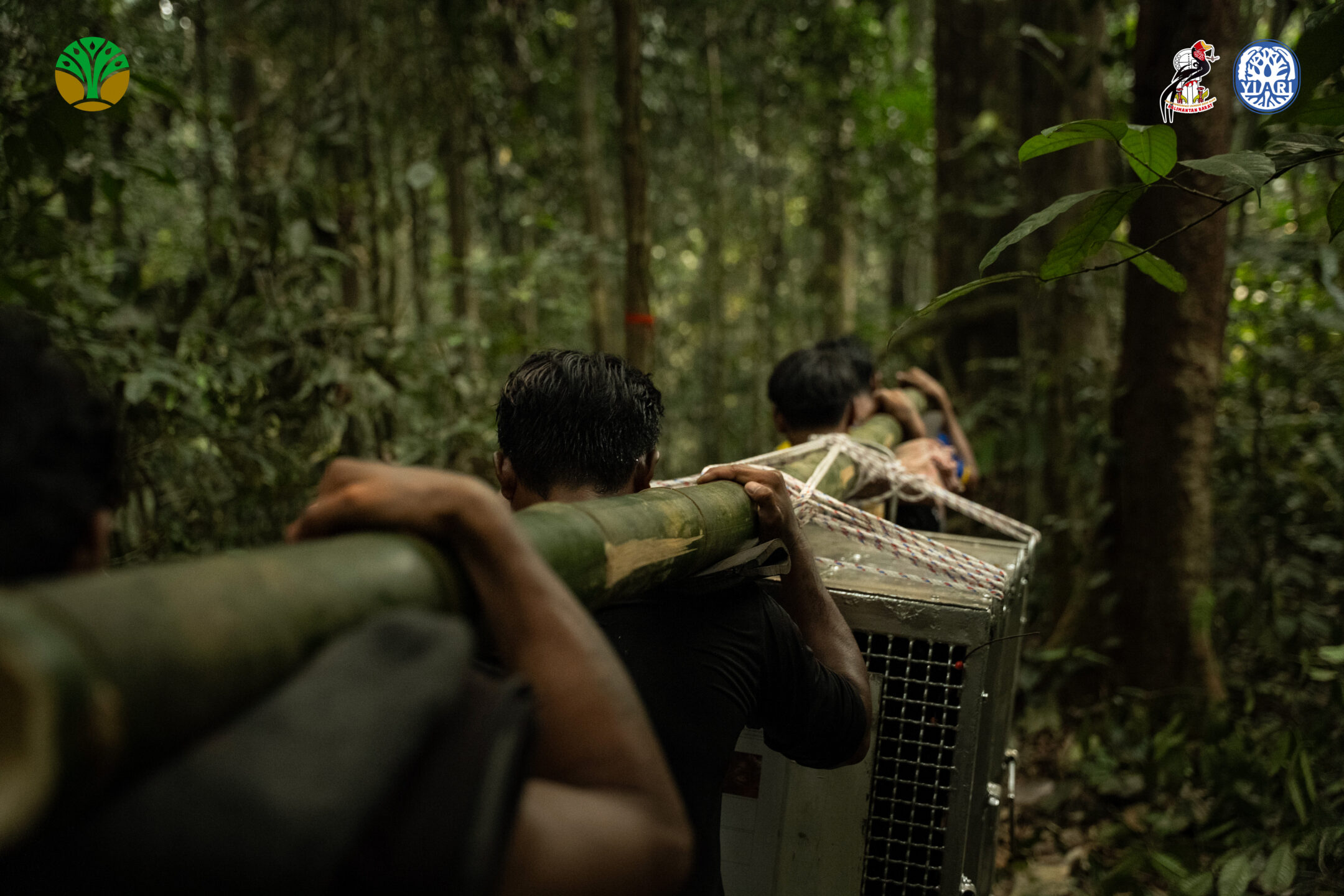
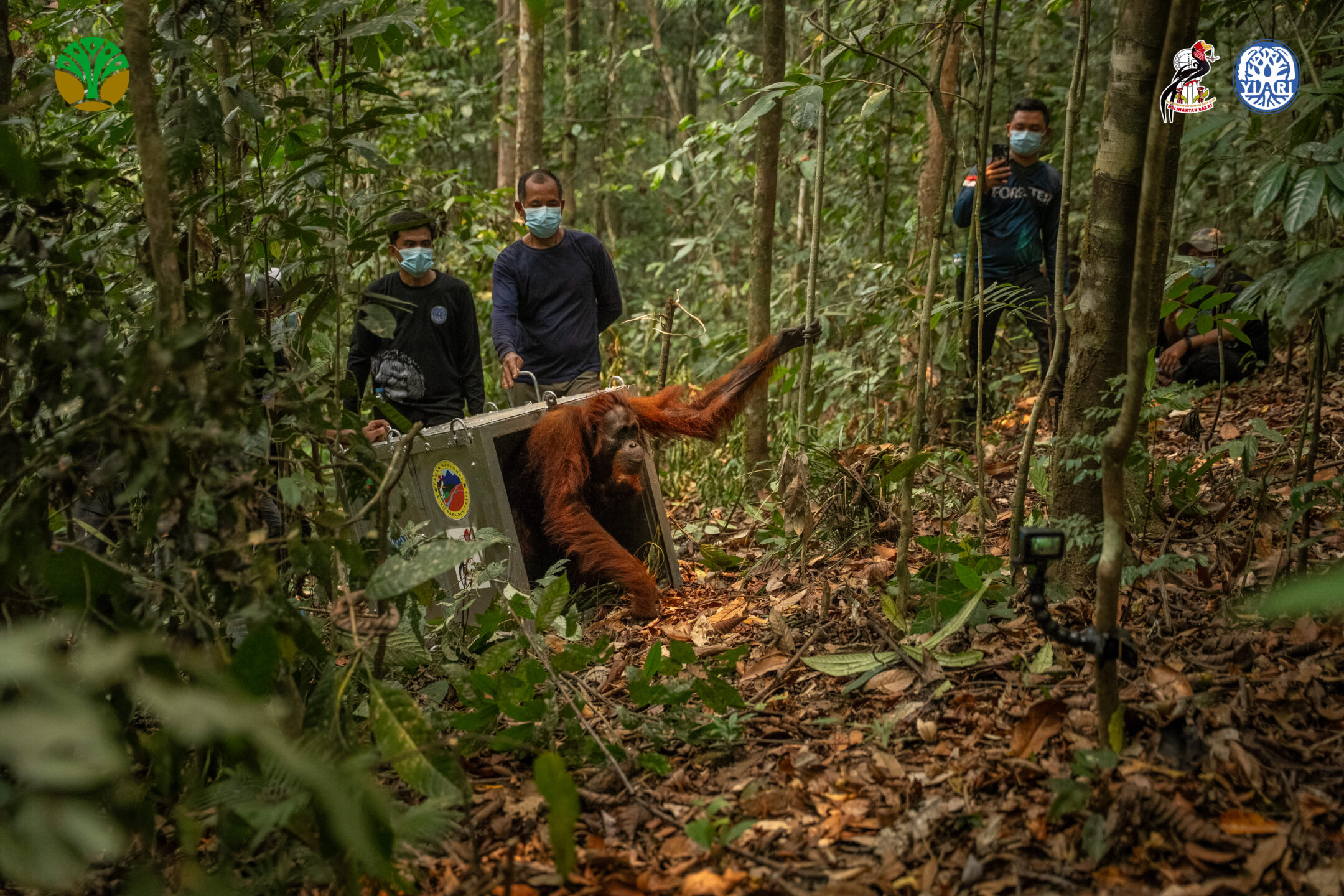
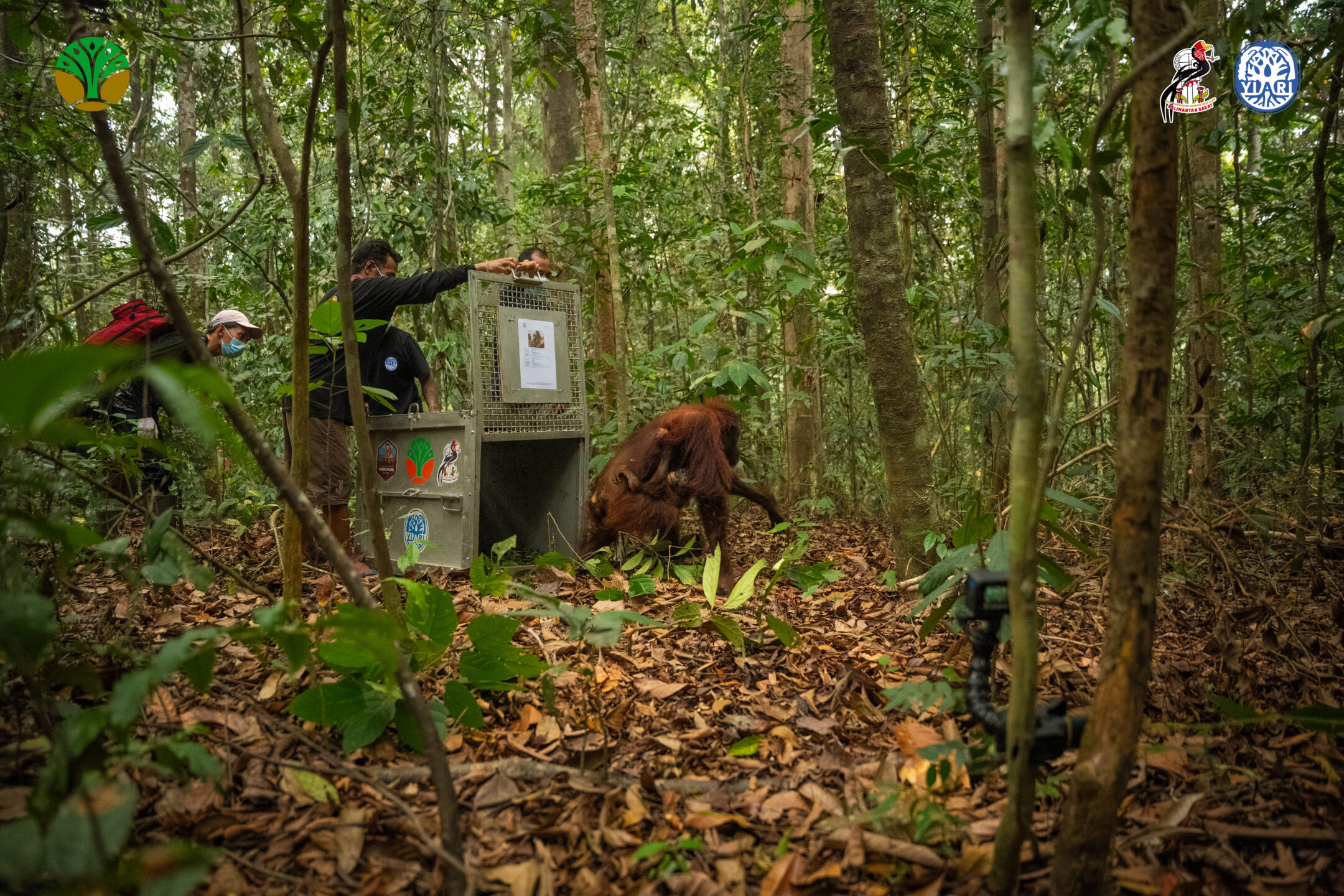
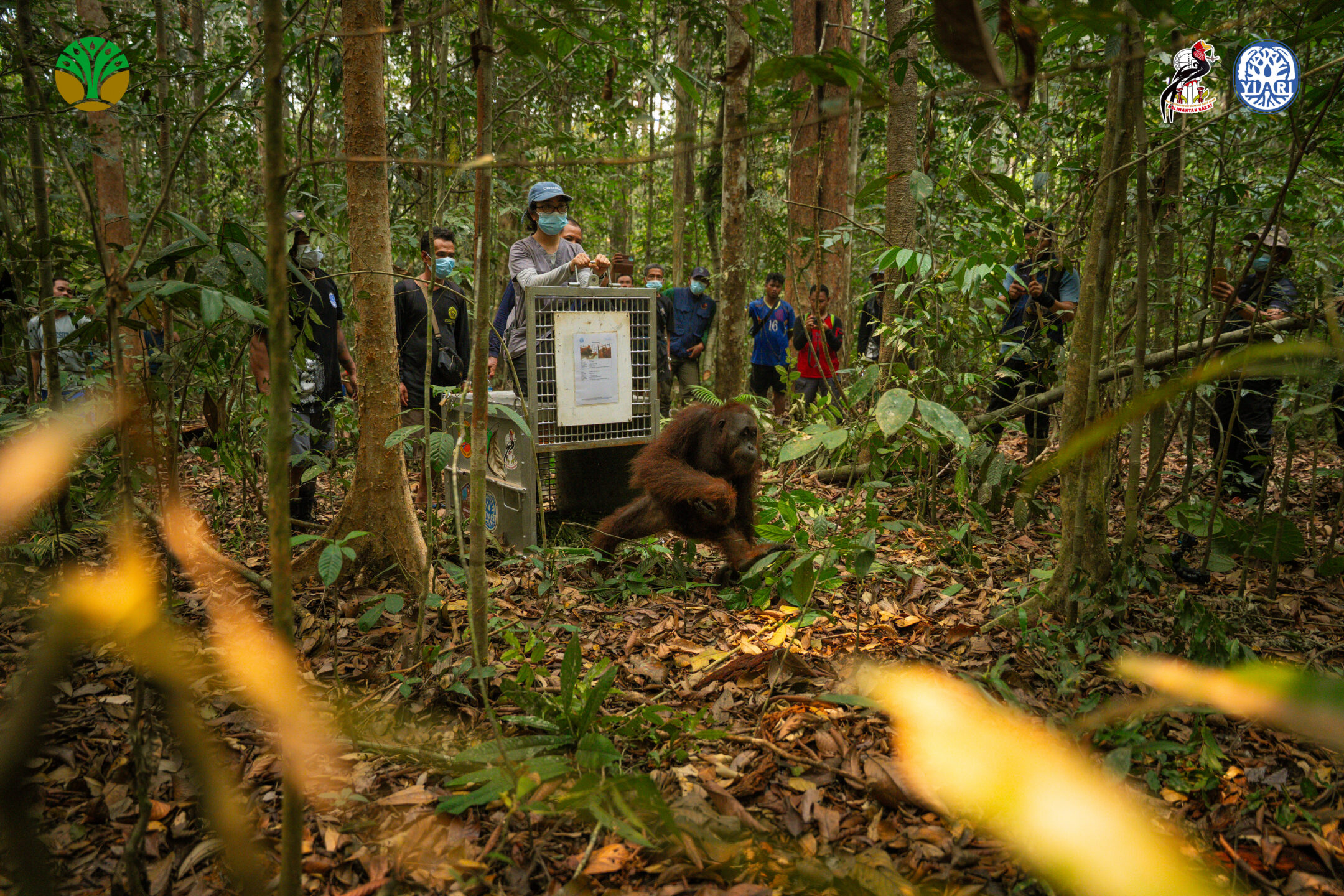
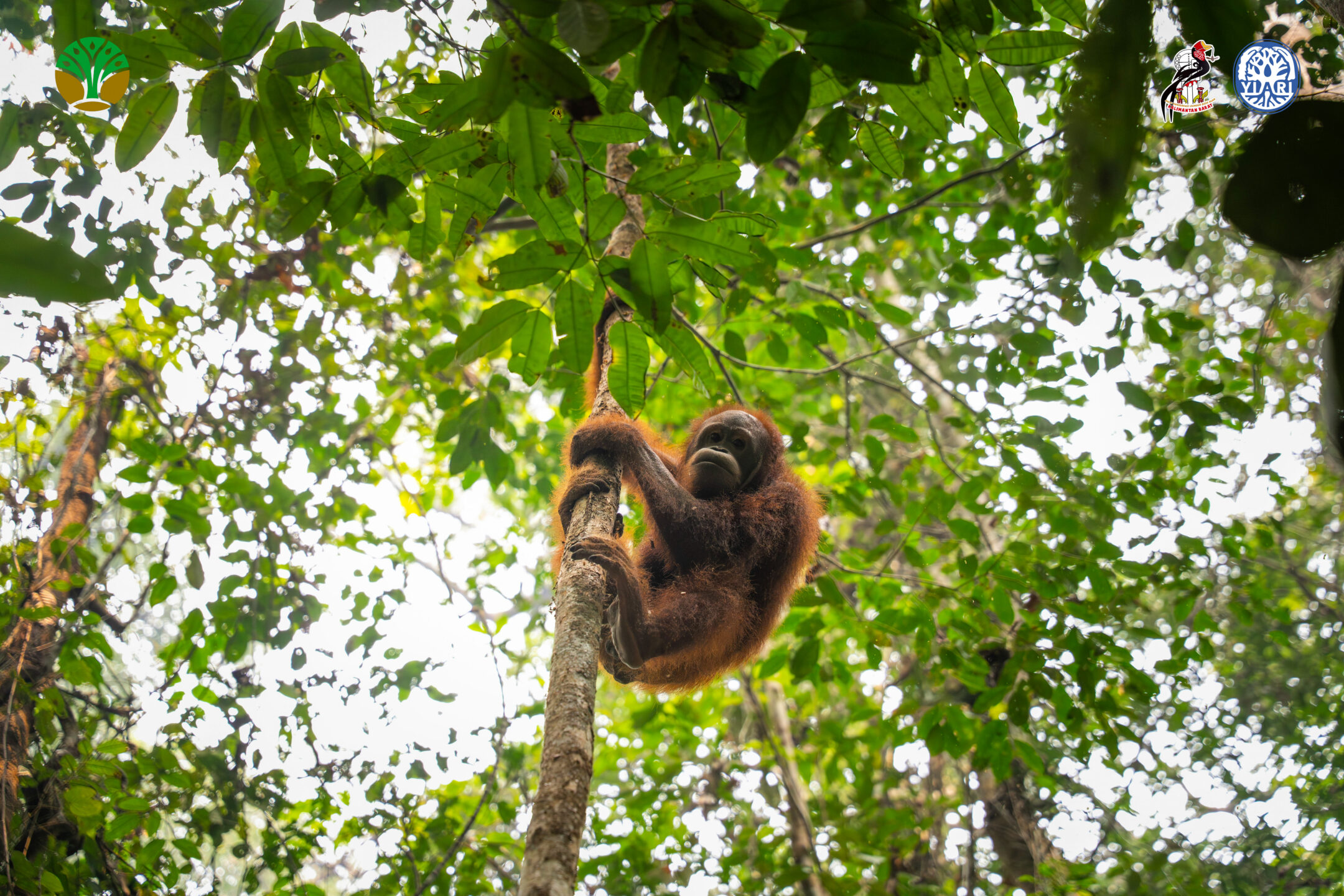
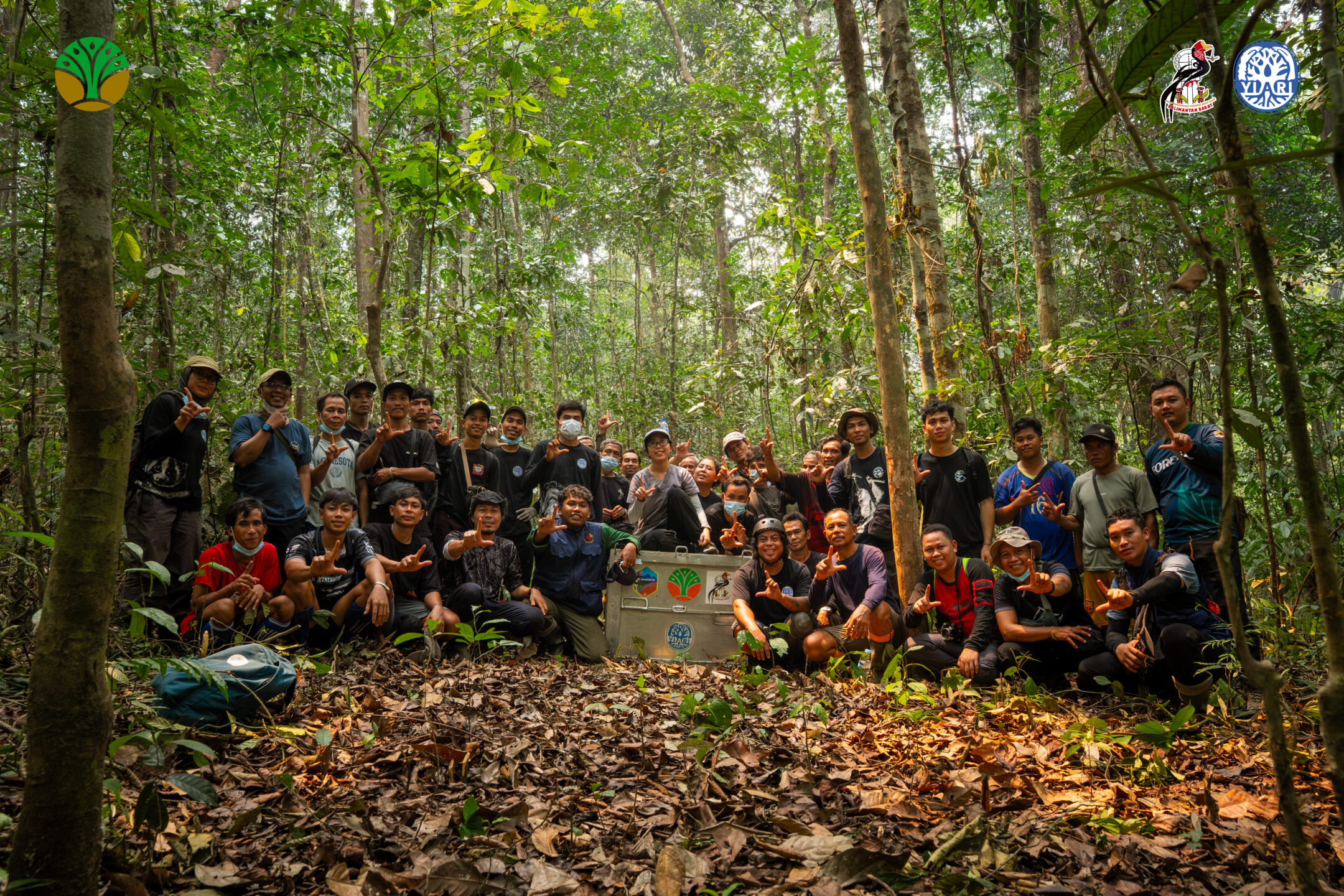
The journey to the release site began before dawn. The team drove for six hours, travelled by boat for an hour, then walked for two more. Local people helped carry the transport crates along the trail, and vets checked on the orangutans throughout. From midday, the orangutans were released one by one at points about 80 metres apart. The team then watched briefly from a distance, keeping human presence to a minimum so the orangutans could settle.
Why Batu Nyambu?
The Batu Nyambu Protection Forest was chosen after a careful assessment of the habitat. It covers around 23,000 hectares of primary and secondary forest, from lowland to sub-montane. A 2023 survey found it to be natural orangutan habitat with enough capacity to support them. It has plenty of food plants, trees for nesting and natural water sources. It also connects to other protected forests in the Arabella–Schwaner landscape, giving orangutans room to roam as fruit seasons change.
Argitoe Ranting, YIARI’s Director of Operations, said: “With forest and land fires still ongoing, we are facing a difficult situation. Many orangutans have lost their habitat, while the forest areas that are safe enough to take them in are becoming increasingly limited. We want to make sure the orangutans we have rescued are not simply moved from one place to another, but genuinely have the chance to survive in their natural habitat. Even in the middle of these fires, this location is still fairly safe and has never burned so far. But translocation is not the final solution. As long as the fires continue and habitat remains under threat, rescue efforts must go hand in hand with protecting the forest that remains.”
The crisis is not over
Since 1 August, BKSDA West Kalimantan and YIARI have rescued 46 orangutans affected by the fires. Many are still receiving intensive care for burns, malnutrition, severe anaemia and other serious conditions. They need time to recover before they can be released.
“This is a very happy moment for us, because wild orangutans should live freely in their natural habitat, not be confined in cages,” said Karmele Llano Sánchez, CEO of YIARI. “These orangutans have suffered trauma and many other effects of the forest fires that destroyed their habitat, leaving them without a home. Even so, we must also recognise that translocations like this are a step we are forced to take when their habitat is no longer safe. Habitat protection will always be the top priority, but as long as their habitat remains under threat, rescue is one of the best options we have to help them survive.”
Fires and haze continue to threaten orangutan habitat across West Kalimantan, and more orangutans are still in danger.
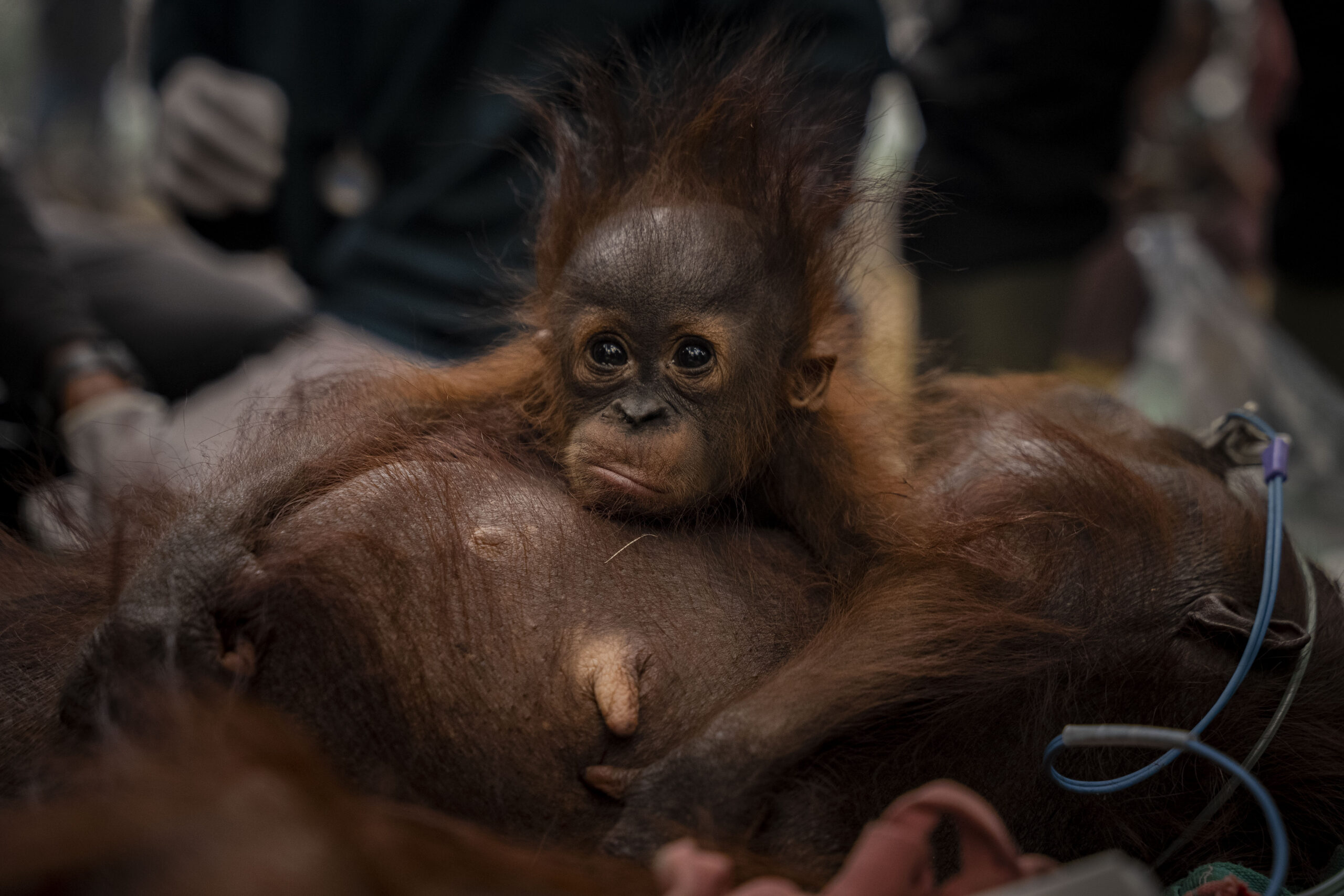
Urgent Forest Fire Crisis
Our partner YIARI has now rescued 46 orangutans from the wildfires tearing through West Kalimantan, Borneo, but many more are still trapped, injured and in urgent need. If you can, please make a donation today!