
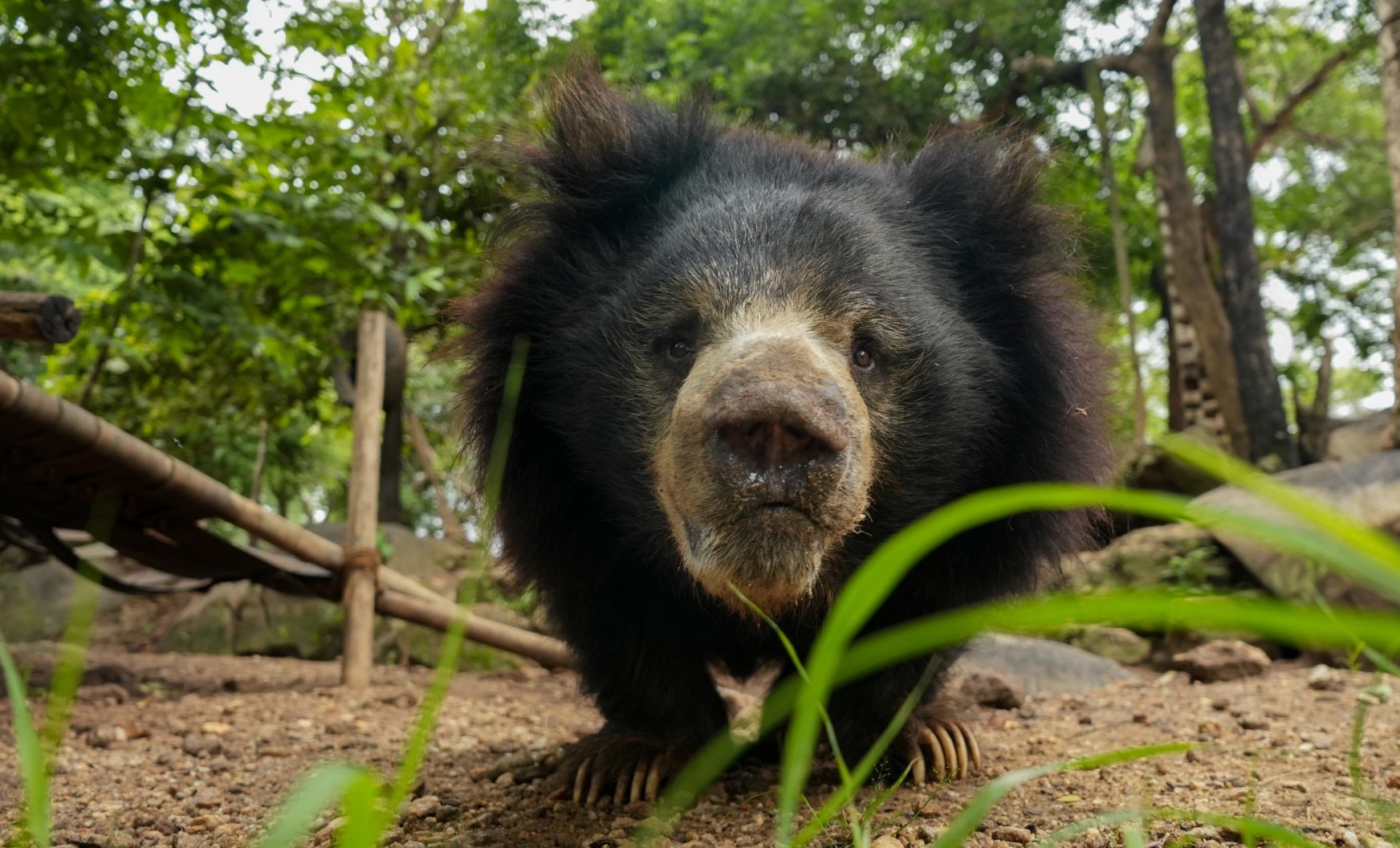
Odum’s Story
Odum’s story began in pain, but thanks to years of dedicated care, it’s now one of peace and play.
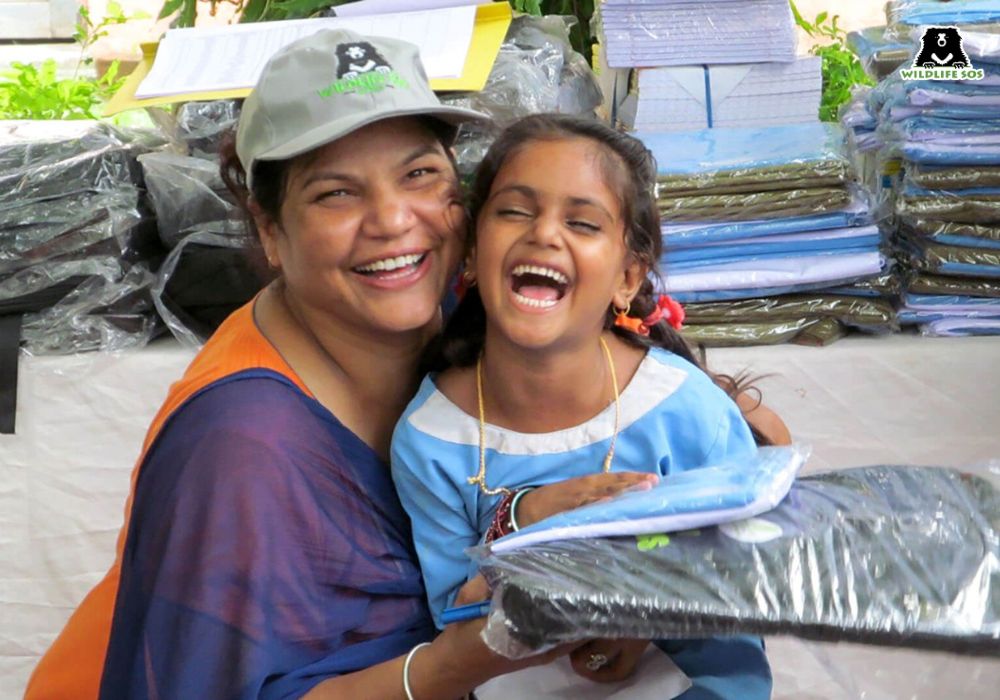
A holistic approach to tackling animal cruelty.
A Trade Rooted in Poverty
For more than 400 years, the nomadic Kalandar people ‘danced’ sloth bears for money, a practice that began as entertainment for Mughal emperors and continued into the twentieth century as roadside entertainment for villagers and tourists. Bear cubs, often only six months old, were poached from the wild after their mothers were killed. The practice was made illegal in India in 1972, but the law went largely unenforced for decades. With a single dancing bear able to support an entire family for a year, most Kalandars had no reason to give theirs up.
A Different Kind of Rescue
We recognised that rescuing the bears alone would not end the cruelty, it would simply push it further underground. So from the mid-1990s, alongside building sanctuaries to house rescued bears, we worked directly with Kalandar communities to offer something better than a bear: training, seed funding, and a route out of poverty. In exchange for surrendering their bear, each family received a seed fund of around 50,000 rupees and vocational training in a trade that didn’t rely on wildlife, from carpet weaving and welding to bicycle repair. Women were given skills training and access to markets to sell what they made, becoming second income earners for the first time, while children were enrolled in school with fees, uniforms, and books provided.
Alternative Livelihoods in Practice
The training programmes were tailored to what worked locally. In Tonk, Rajasthan, Wildlife SOS set up a school teaching Aratari, the gold and silver thread embroidery used on wedding saris. Within three years, 68 young men had trained and found work in local workshops, and twelve went on to form their own cooperative. The same training was later opened up to young women, who formed a cooperative of their own making bags and cushion covers for shopkeepers in Jaipur.
Elsewhere, women received micro-funding and skills training to start small businesses of their own. Rajiya Bee, once dependent on her family’s dancing bear, used this support to open a peanut stall that went on to support her whole family and put her children through school, one of thousands of similar stories across the programme.
A Community Transformed
By the time the last dancing bear was surrendered on Christmas Eve 2009, we had rescued more than 620 bears from the trade. But the numbers behind the community’s transformation are just as striking. Wildlife SOS has since educated over 17,000 Kalandar children, and more than 5,000 Kalandar families now support themselves through legal, sustainable livelihoods rather than wildlife exploitation. Remarkably, close to 40% of Wildlife SOS’s own staff today come from the Kalandar community.
Your Support Can Make a Difference
Though the dancing bear trade is history, the work continues. More than 170 rescued bears still live out their lives in sanctuaries across India, and our partners, Wildlife SOS, remain vigilant against bear cub poaching at the country’s borders. Your support helps care for these bears for life and keeps the Kalandar community’s new livelihoods secure.
Sadly in 2026 three dancing bears were rescued from the Nepalese border – we must remain vigilant to prevent a return to this horrendous cruelty.
DONATE TODAY TO HELP CARE FOR THESE BEARS
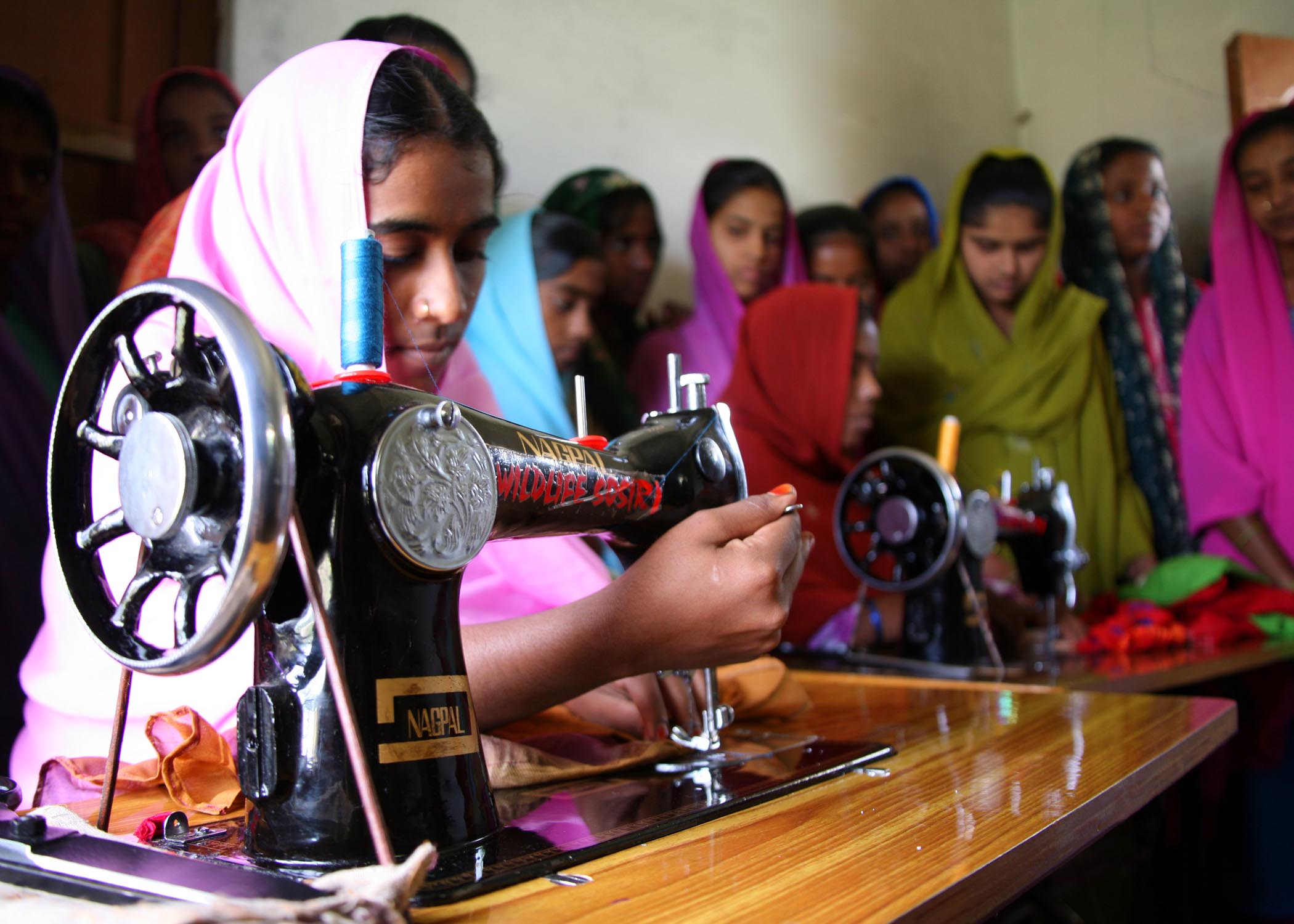
How education helped end the 'dancing bear' trade
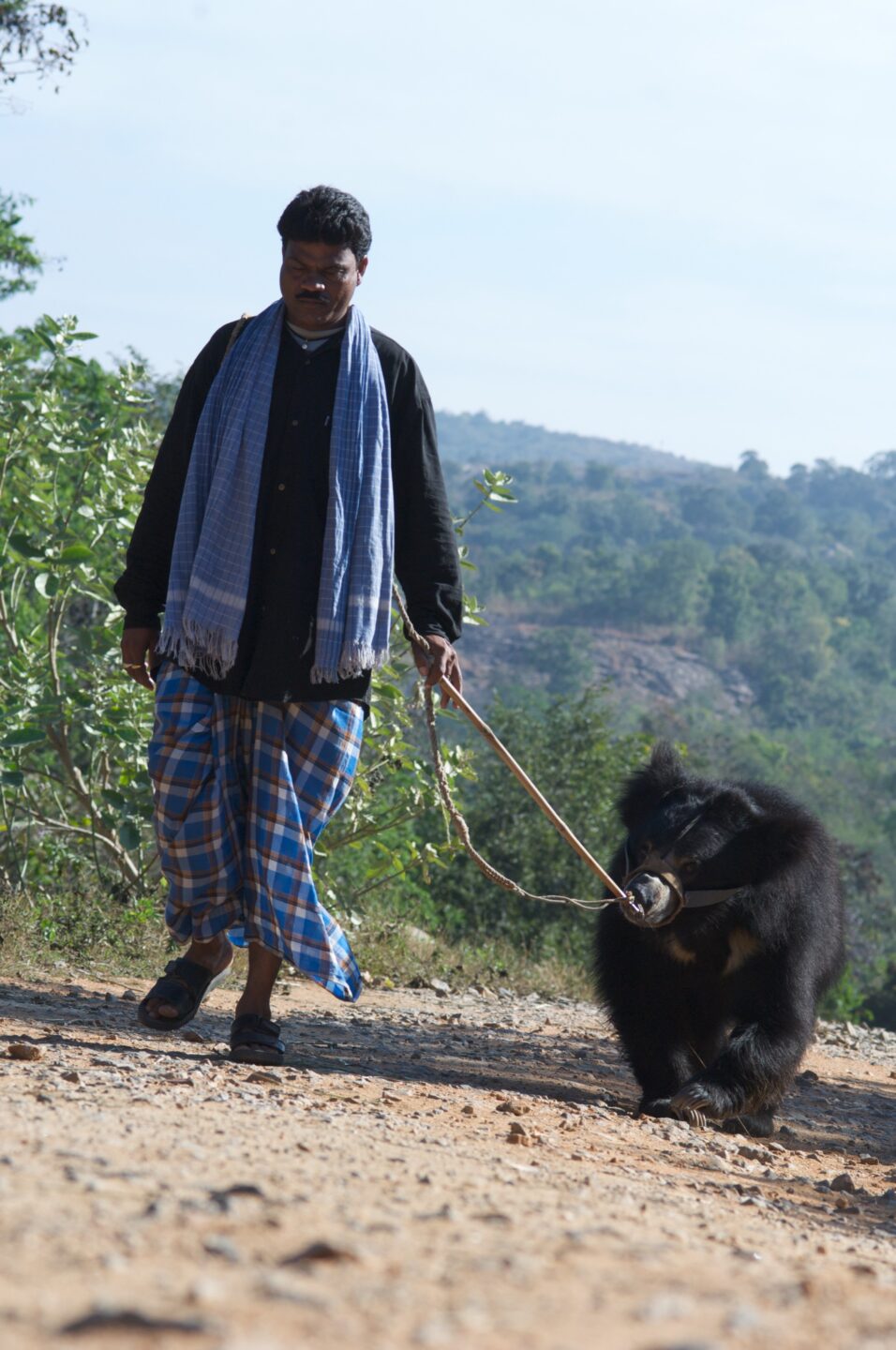 The Last Dancing Bear 2009
 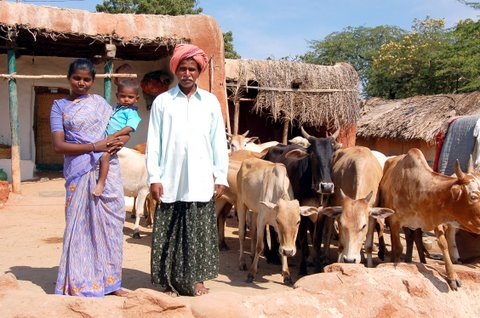 Kalandar Family Outside their New Home
 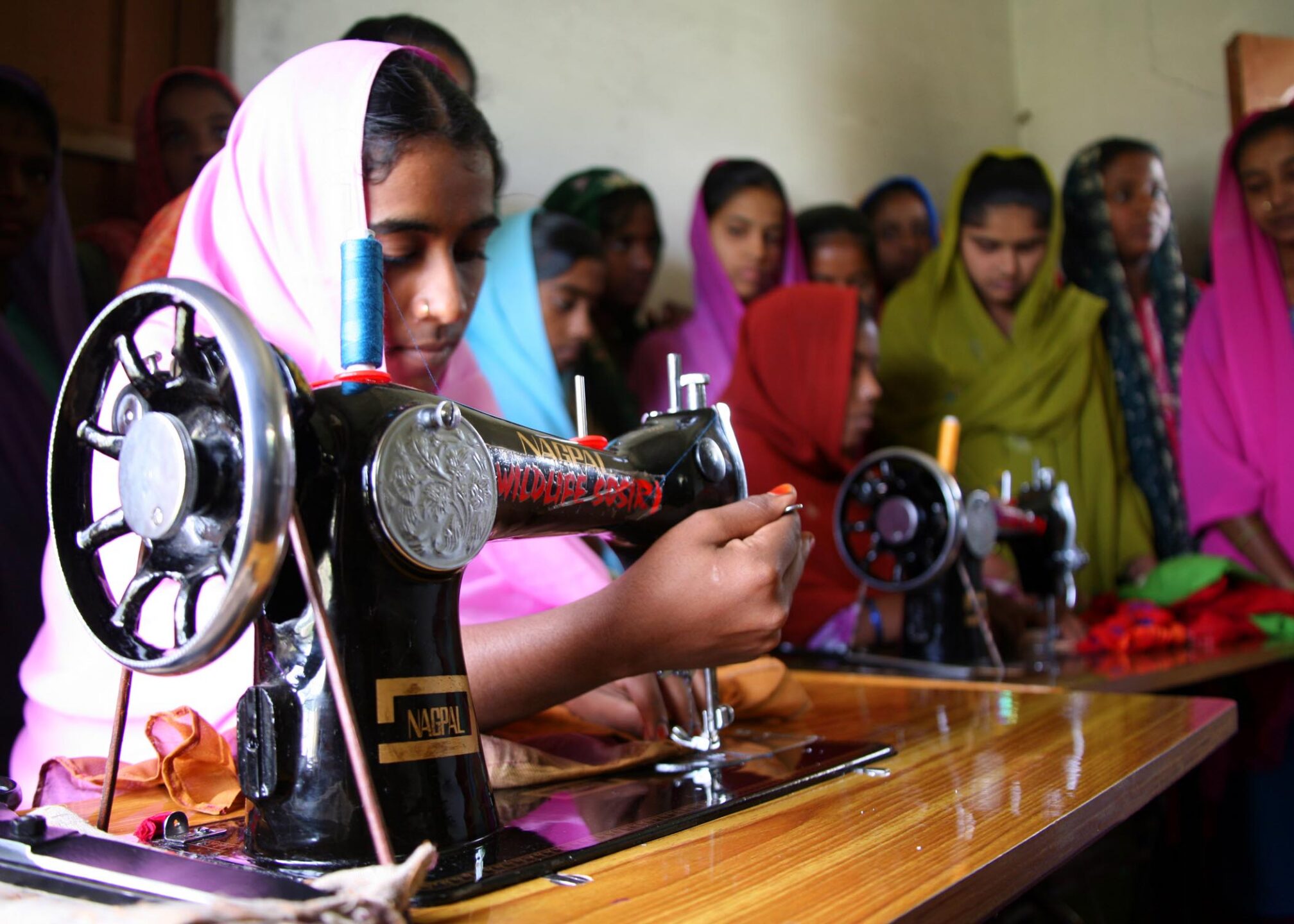 Kalandar woman learning to sew
 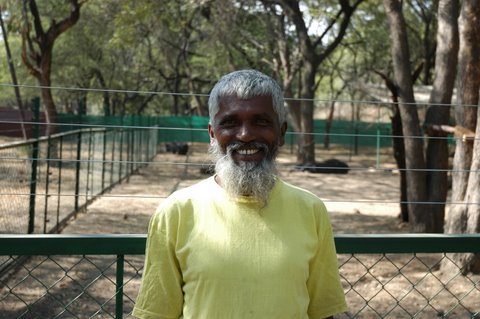 Many former captors are now employed to look after the bears
 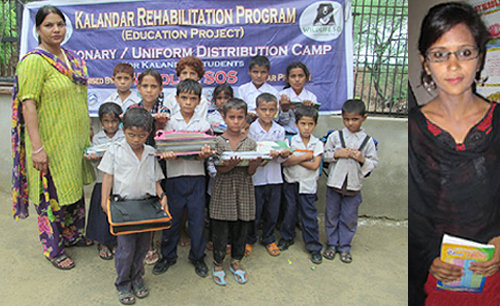 The Kalandar children now have access to education
Odum’s story began in pain, but thanks to years of dedicated care, it’s now one of peace and play.
‘Friends of IAR’ is the name given to our community of most loyal supporters, those who donate monthly. Become a Friend of IAR today!
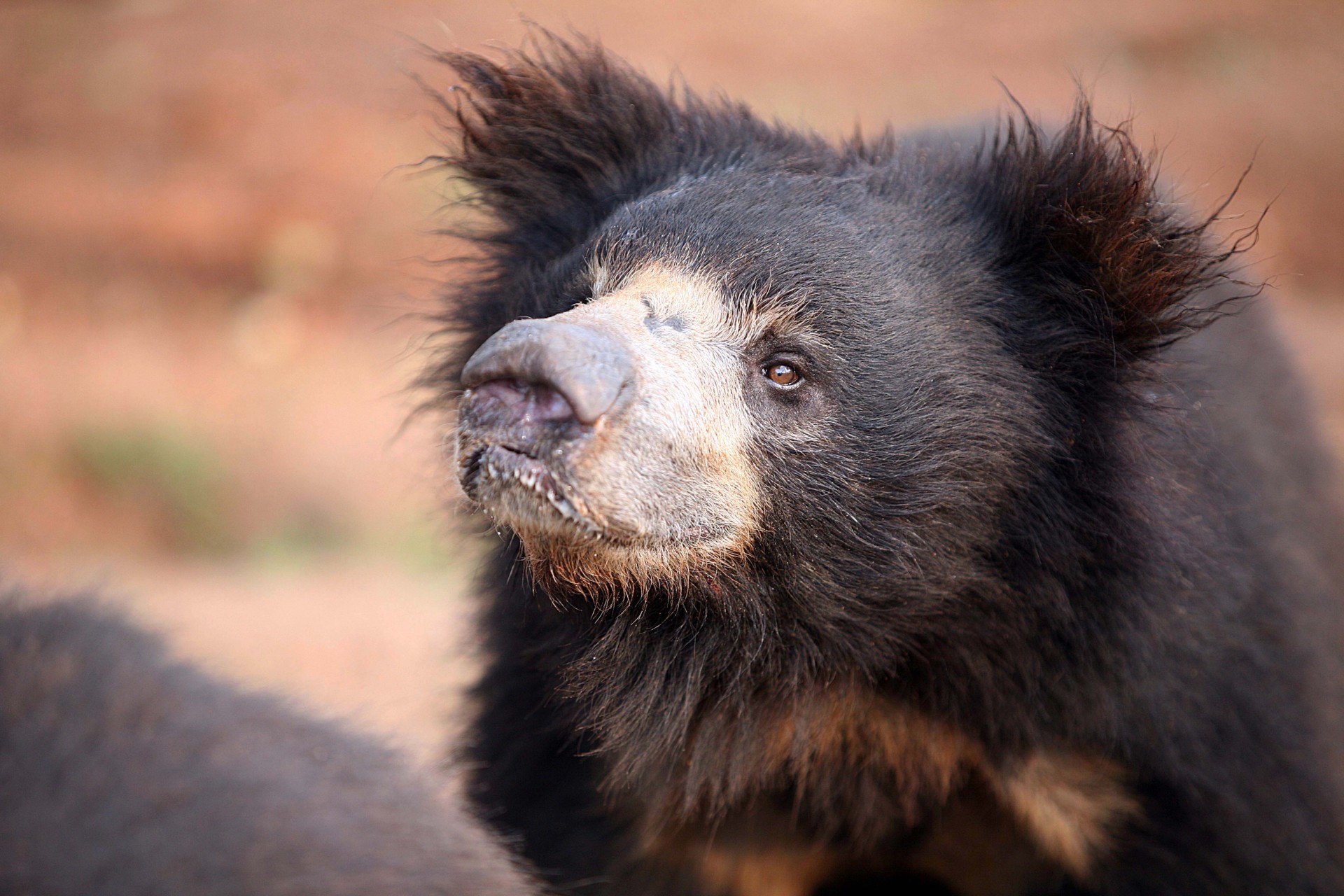
For over four centuries, India’s sloth bears were made to “dance” for crowds. What looked like a performance was a reaction to excruciating pain.